What Is That's Not My Neighbor?
That's Not My Neighbor is a horror puzzle game where you play as the doorman of a 1950s apartment building in the middle of a Doppelgänger crisis. Your job is deceptively simple: check each visitor's documents, verify their identity against the resident files, and decide whether to let them in or call for backup. The building's occupants are counting on you. So are the Doppelgängers — they're counting on you to slip up.
The game gets its tension not from jump scares or combat, but from doubt. Every visitor could be legitimate. Every visitor could also be something wearing a convincing face. The paperwork looks right until it doesn't. The photo matches until you look a second time. That slow creep of uncertainty — and the consequences of being wrong — is what makes it stick.
The Setting
It's 1955. Doppelgängers — creatures that can replicate the appearance of real people — have started infiltrating residential buildings. The D.D.D. (Doppelgänger Detection Department) has placed doormen at high-risk locations to act as the first and last line of defense. You are one of them.
Each visitor arrives with paperwork: an entry request, an ID, claimed apartment number, and sometimes additional documentation. You have the resident list, the building directory, and a telephone to call upstairs if you need to verify someone. You also have an emergency button if verification is no longer an option. Use it wisely — a false alarm wastes resources; a missed Doppelgänger costs something worse.
How to Play
The game is entirely mouse-driven. There's no movement, no timing mechanic — just documents, decisions, and attention to detail.
| Control | Action |
|---|
| Mouse Click | Interact with documents, buttons, and all on-desk tools |
| Drag & Drop | Reposition papers to compare information side by side |
| Telephone | Call the resident's apartment to verify identity before deciding |
| Emergency Button | Summon the D.D.D. response team when a Doppelgänger is confirmed |
| Approve / Deny | Grant or refuse entry once your check is complete |
The rule that matters most: Every field on every document needs to match. Name, photo, apartment number, signature — one mismatch is a question. Two mismatches is an answer.
Doorman Tips
- Read the entry request first — it tells you who they claim to be and who they're visiting; cross-check that against the resident list before touching the ID
- The photo is the hardest thing to fake perfectly — look at it last and give it a full second; rushed comparison misses subtle differences
- Use the phone more than you think you need to — calling takes time but it's the only certain verification; pride in making fast decisions gets residents killed
- Watch for document inconsistencies, not just forgeries — Doppelgängers sometimes carry mostly real paperwork with one wrong detail; the almost-perfect case is harder than the obvious fake
- If the resident doesn't answer — that itself is information; either they're not home, or something already got in
- Don't approve under time pressure — the game doesn't punish you for taking longer; it punishes you for approving the wrong visitor
More Games Like This
If the slow-burn tension here is what you're after, these are worth playing next:
- No, I'm Not a Human — The same premise but flipped: now you're the one trying to pass undetected among entities that know something is wrong.
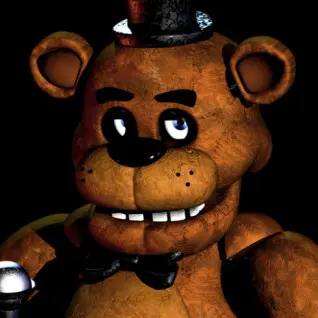
- Five Nights at Freddy's — Resource management under threat. Survive until dawn by making the right call at the right moment.
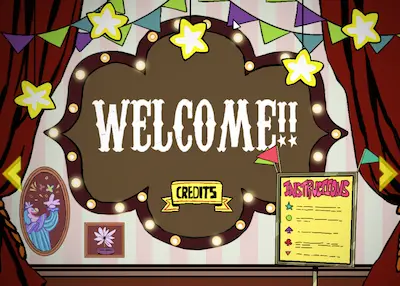
- Exhibit of Sorrows — Atmospheric horror without action. Wander a carnival that grows more wrong the further you go.
Frequently Asked Questions
Is That's Not My Neighbor free to play here?
Yes. That's Not My Neighbor plays completely free in your browser on this page — no download, no account, and no plugins required.
What happens if I let in a Doppelgänger?
The run ends. Exactly how depends on the game's progression, but approving a Doppelgänger is always a failure state. The details of what follows are deliberately unclear in the early game — part of the tension is not knowing how much is riding on each decision.
How do I know if a visitor is a Doppelgänger?
Through document verification. Check every field: name, photo, apartment number, signature, and any supporting paperwork. Discrepancies are your signal. When in doubt, use the telephone — it's there for exactly this situation.
Does the game get harder over time?
Yes. Early Doppelgängers make obvious mistakes. As the game progresses, the forgeries become more convincing and the discrepancies become smaller. What was clearly wrong in the first shift becomes a single mismatched detail later.
Is That's Not My Neighbor similar to Papers, Please?
The comparison is warranted — both games are document-checking simulators with mounting pressure and moral weight. That's Not My Neighbor has a tighter scope with a horror tone; Papers, Please is more expansive with political and ethical complexity. If you like one, you'll likely appreciate the other.